
Switch to: German
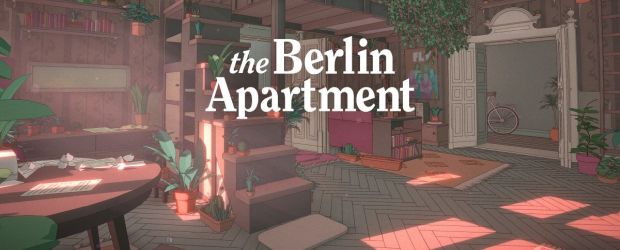
Different eras, multiple perspectives, same Berlin Apartment.
The Berlin Apartment was developed by Blue Backpack Games, formerly known as btf Games, the video game division of bildundtonfabrik in Cologne, and responsible for titles such as Constance, Trüberbrook and the video game adaptations of the former TV show Neo Magazin Royale. It was released on November 17th on Steam for PC, PlayStation 5 and Xbox Series X|S for €24.50 / GBP 20.99 / $24.99 by btf, ByteRockers’ Games and PARCO Games.
2020 – Traces
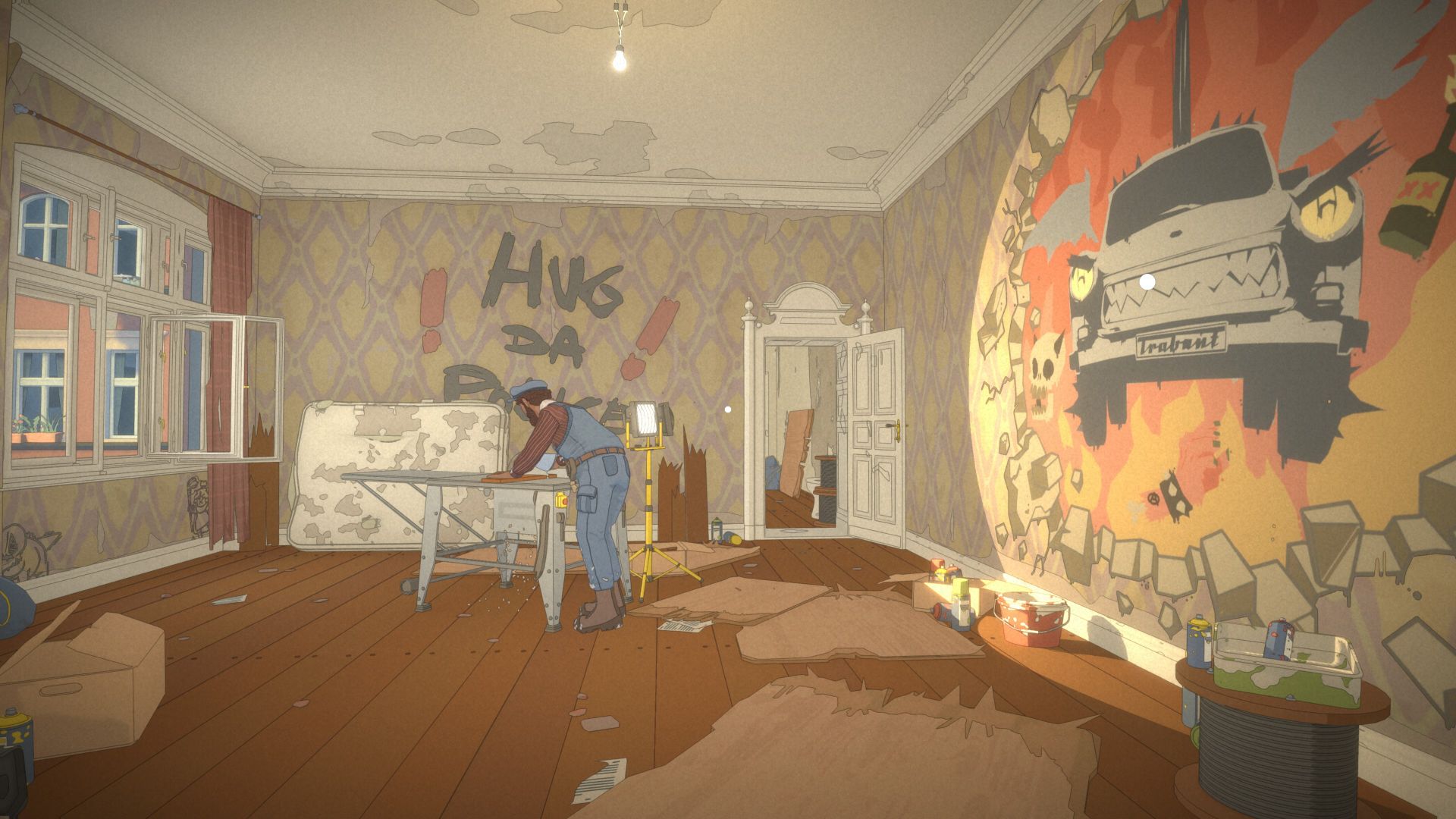
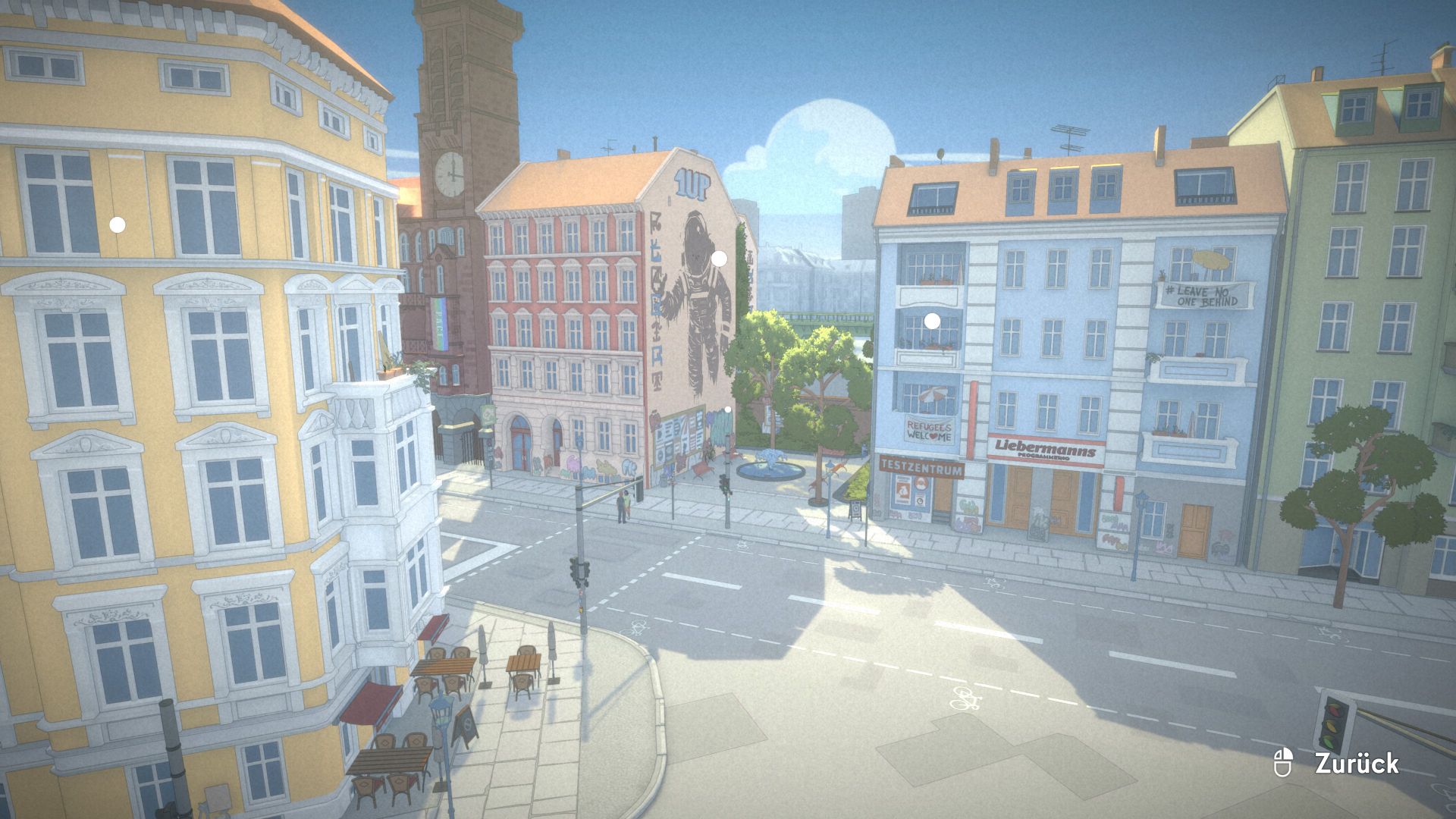
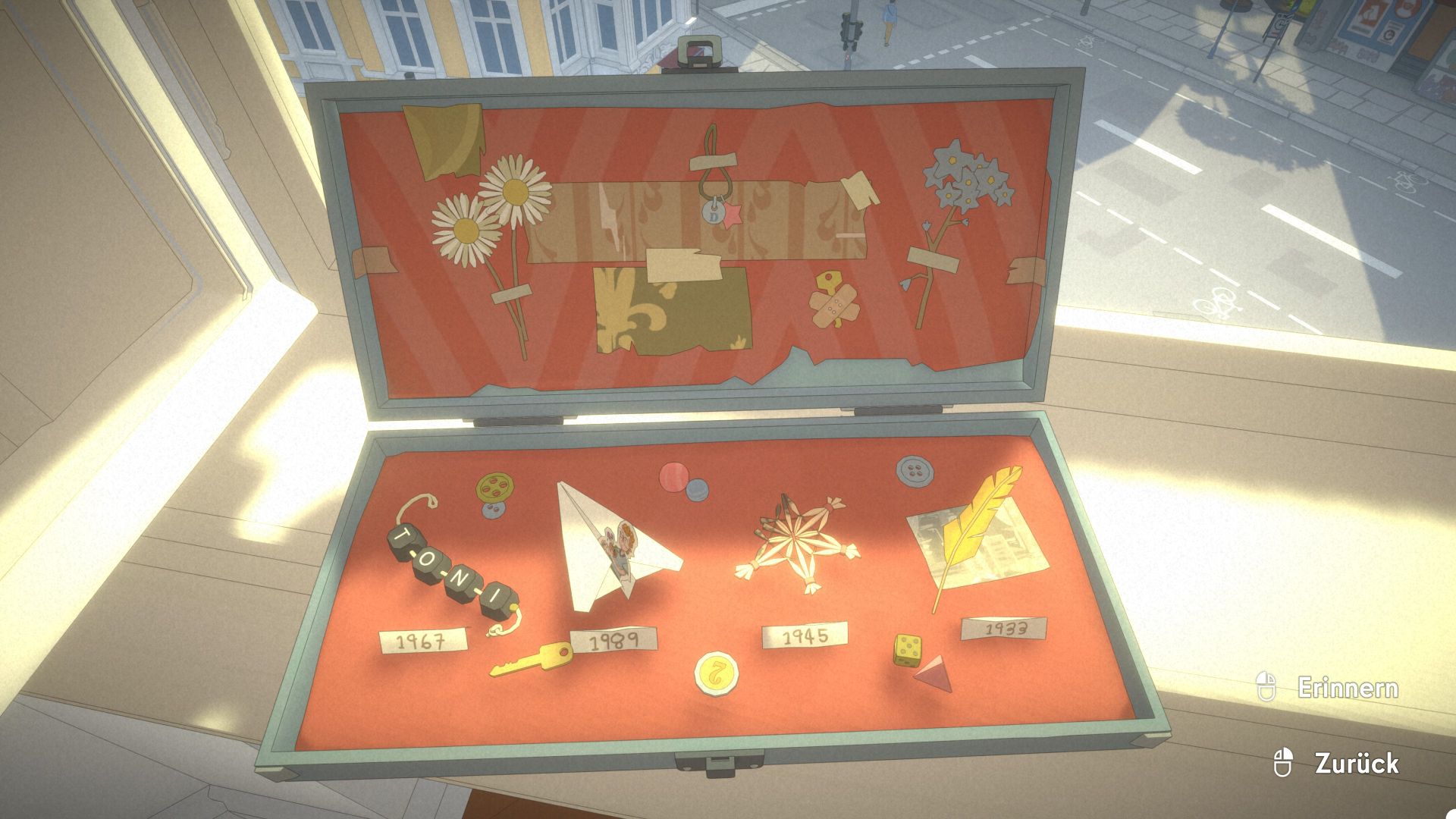
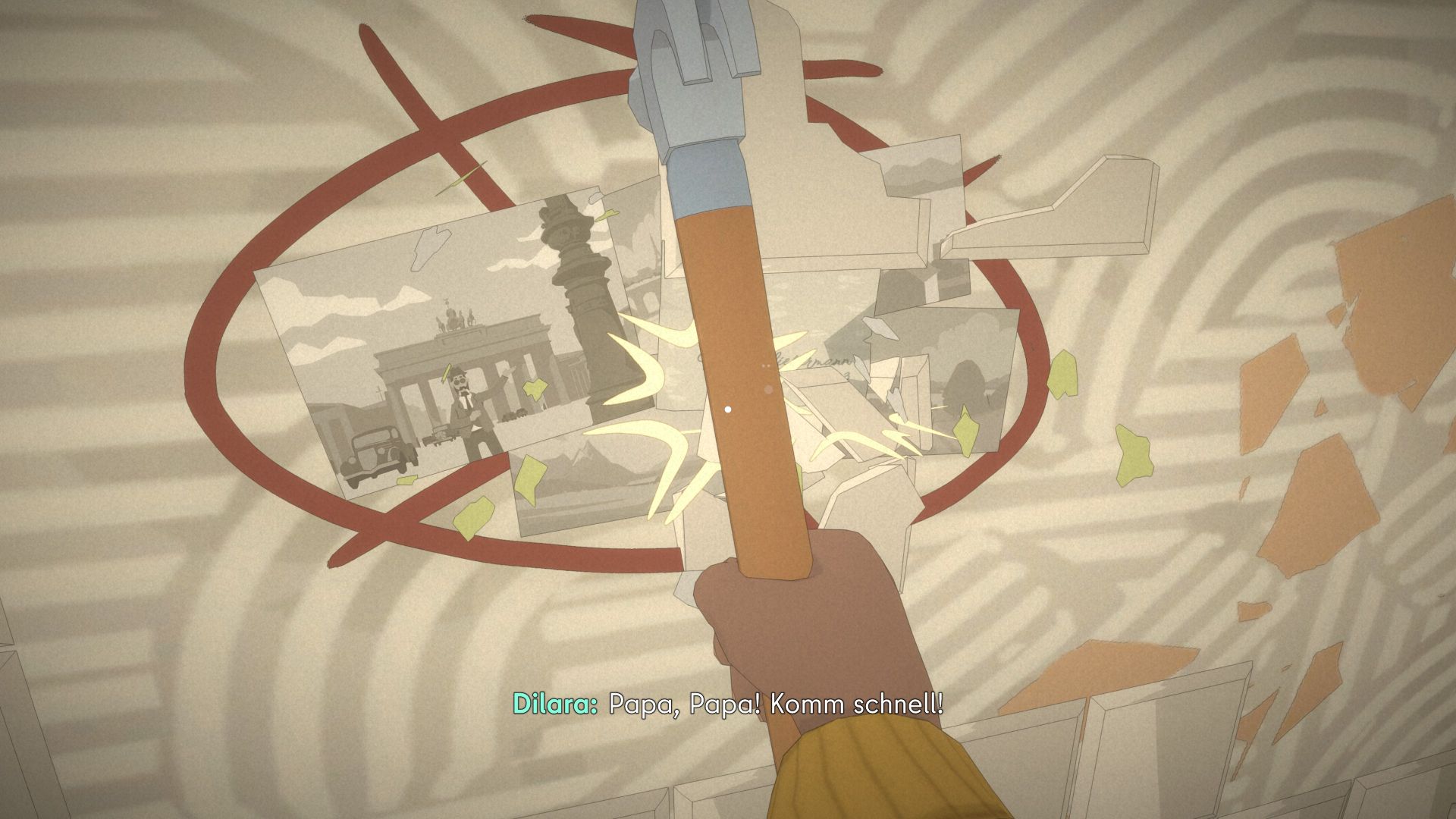
The year is 2020, and second-grader Dilara (Nico May Glaser) is helping her father Malik (Tayfun Bademsoy) renovate an enormous old Berlin apartment. While stripping wallpaper and removing tiles, they discover remnants of bygone days and create stories from different eras—1933, 1945, 1967 and 1989 – reminiscent of Robert Zemeckis’ 2024 film Here. Each chapter is self-contained, but astute players will also find connections between the different time periods and the apartment’s tenants. The main storyline set during the height of the Corona pandemic is somewhat thin, even though it’s a joy to listen to the likeable father-daughter duo. The game briefly mentions that in-person classes aren’t currently being held due to protective measures, and we can see a test center in the neighbourhood, but there’s not much more to it than that. The main focus is clearly on the other eras, which we gradually explore in a non-chronological order.
1933 – The Suitcase
After 25 years of a dreary office job reminiscent of the introduction of KARMA: The Dark World, Josef Liebermann (Karsten Troyke) decides to open the cinema Minerva Lichtspiele, offering people a refuge of entertainment amidst the worries and hardships following the stock market crash on Black Friday in 1927. We enter his apartment in 1933. With the rising influence of the Nazis, Jews like him were subjected to increasingly severe reprisals, culminating in persecution and later systematic extermination. As we pack his suitcase in his Berlin apartment with the emotional support of Esther (Sharon Brauner) – he intends to flee to France – we witness the construction and destruction of his cinema in authentically staged silent film sequences.
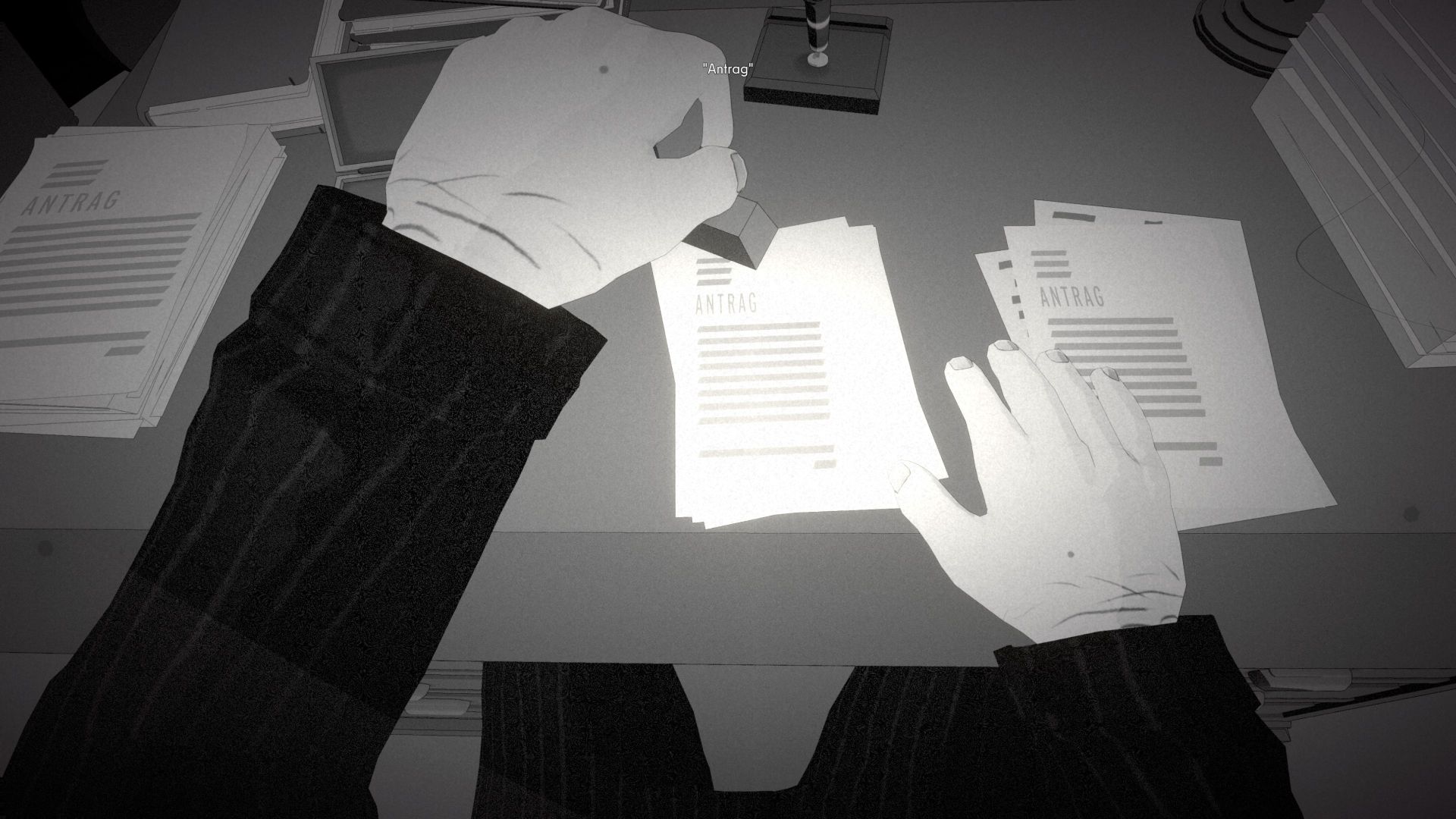
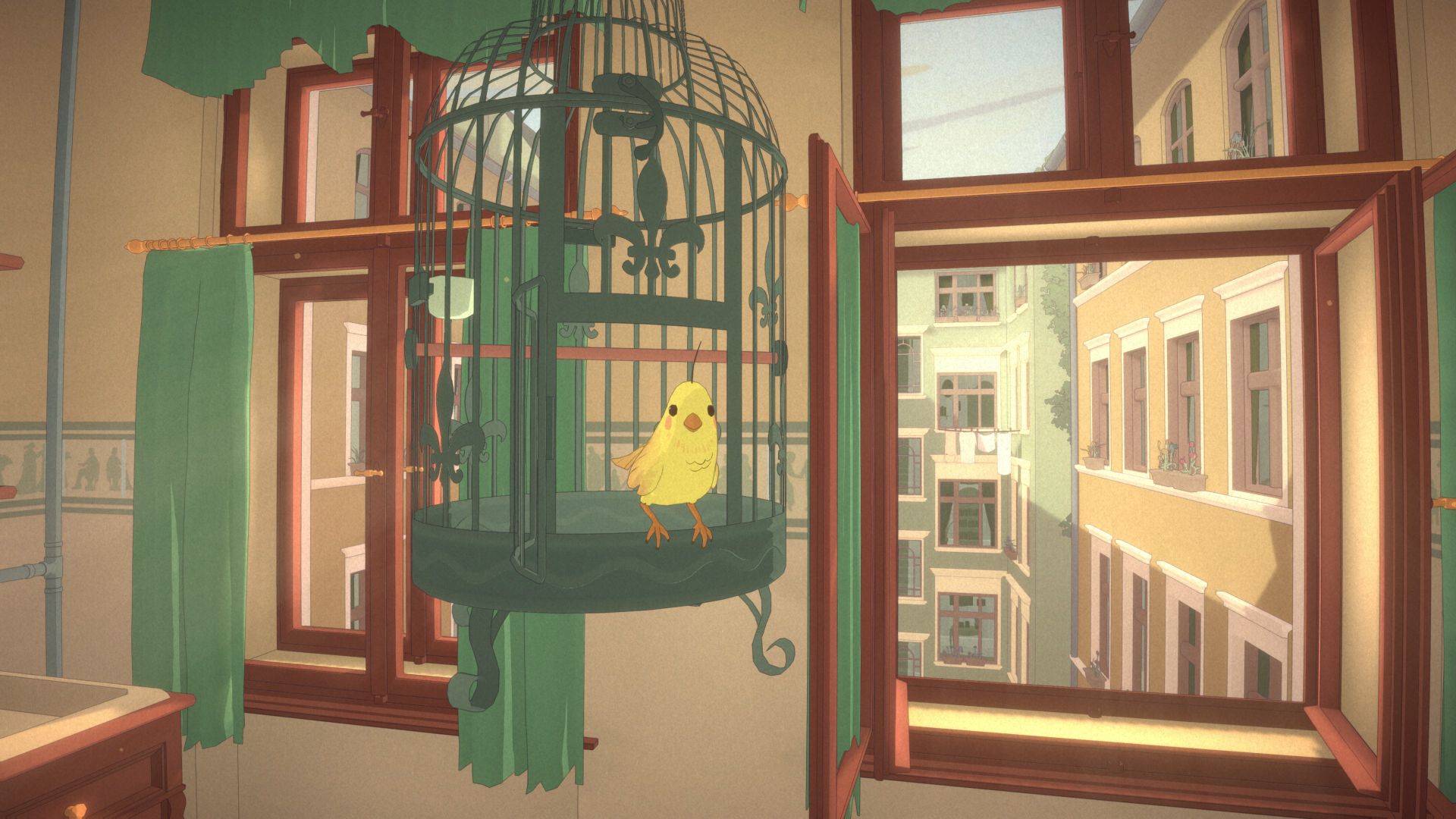
We listen to Josef talk at length about film classics like All Quiet on the Western Front and Metropolis or literary works like Franz Kafka’s The Trial. We must be quick to gather as many of his belongings as possible, such as his lucky shoes, a pocket watch and his diary, and arrange them efficiently in a Tetris-like mini-game. The tension mounts throughout this chapter due to carefully aligned set pieces and superb audio design. Josef and Esther are voiced by the same voice cast in both German and English, which applies to most of the game’s characters.
1945 – Silent Night
In another chapter, we join young Mathilda (Yuna Bennett), her brother Lukas (Sam Graffam) and her mother Magda (Jessica Leinen) in decorating the Christmas tree and, at the same time, the entire apartment—or what’s left of it, since it’s December 24th, 1945. Where windows might once have been, the wind whistles through a makeshift wooden partition. Lukas no longer speaks and Magda lays the foundation stone for what would later become the Berlin Wall as a rubble woman. At Gesundbrunnen station, instead of rations, she only received laughter from the Russians, she complains. After we’ve placed baby Jesus in the crib and lit candles, gradually bathing the room in warm light, Mathilda wants to look for more decorations in a locked room, for which she needs a well-insulated winter coat.
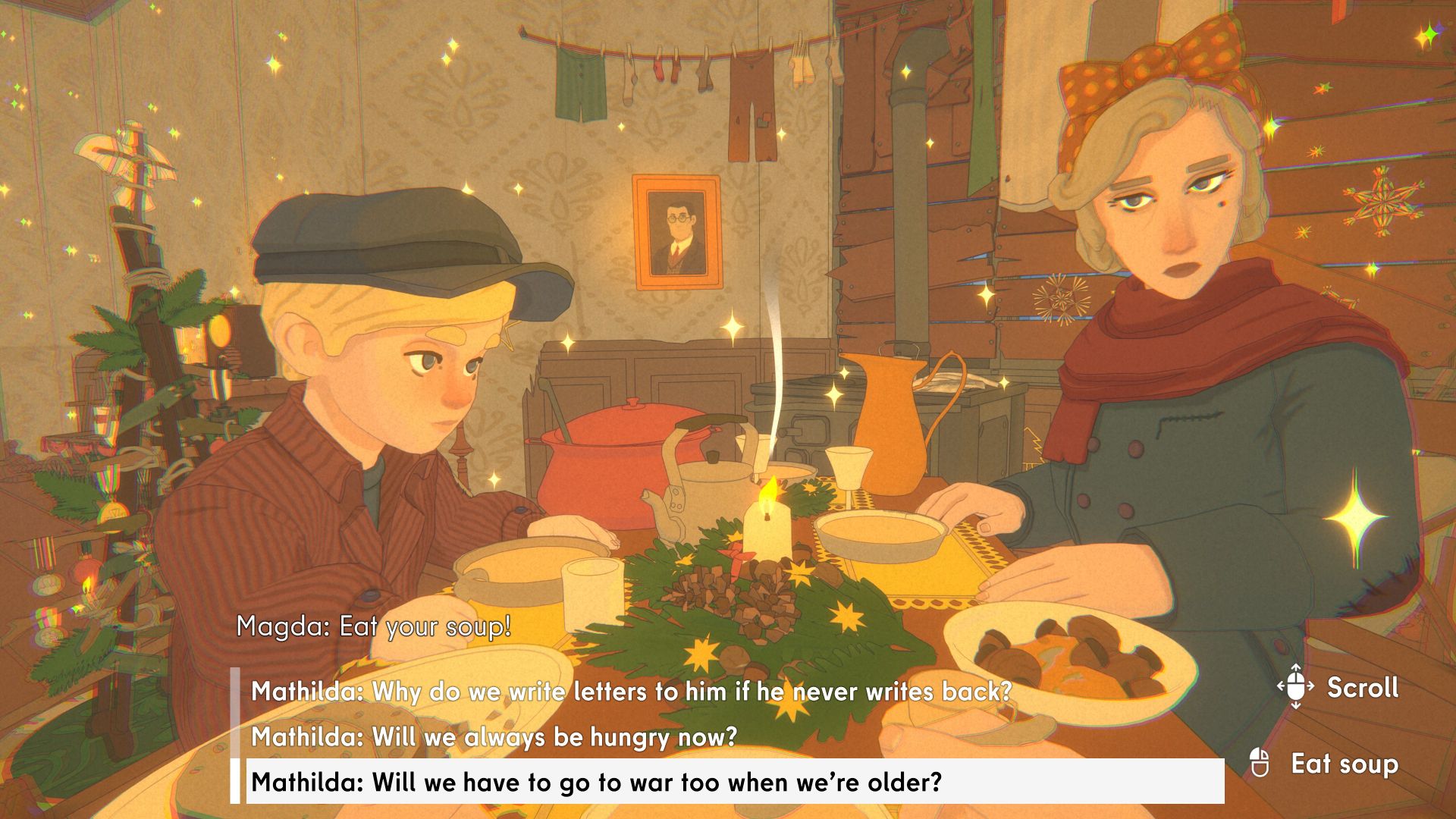
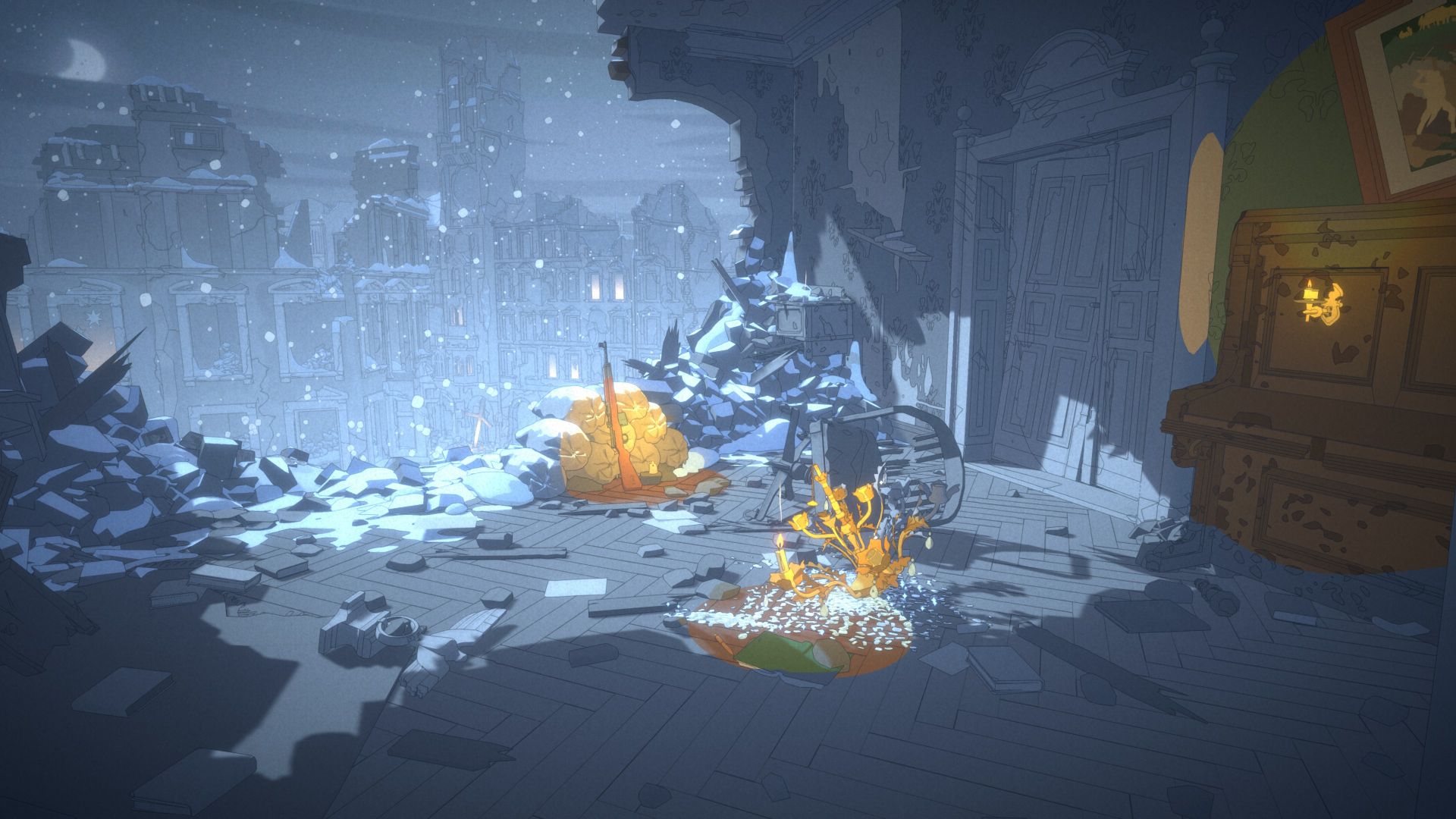
The outer wall of the apartment was completely destroyed in the war, and against the backdrop of the utterly devastated Berlin, Mathilda rummages through rubble, discovering period household blessings, telephone books and songbooks. She also learns more about her missing father, apparently a senior Nazi officer. Amid her mother’s lamentations, Mathilda decorates the tree with old solyanka tins, cartridge cases, an excerpt from a famous speech by Otto von Bismarck from 1888, a Nazi-themed cutlery set and her father’s medals. At the festive table, she confronts her mother by asking if they’re the bad guys—or she keeps quiet, which would suit Magda just fine. The choice is yours, but the dialogue isn’t significantly affected by it. It will take decades before this dark chapter is thoroughly examined and a culture of remembrance begins to form. This period is underscored by an increasingly voluminous tapestry of orchestral music, which, combined with the game’s presentation, sets a unique mood.
1967 – Interferences from Orbit
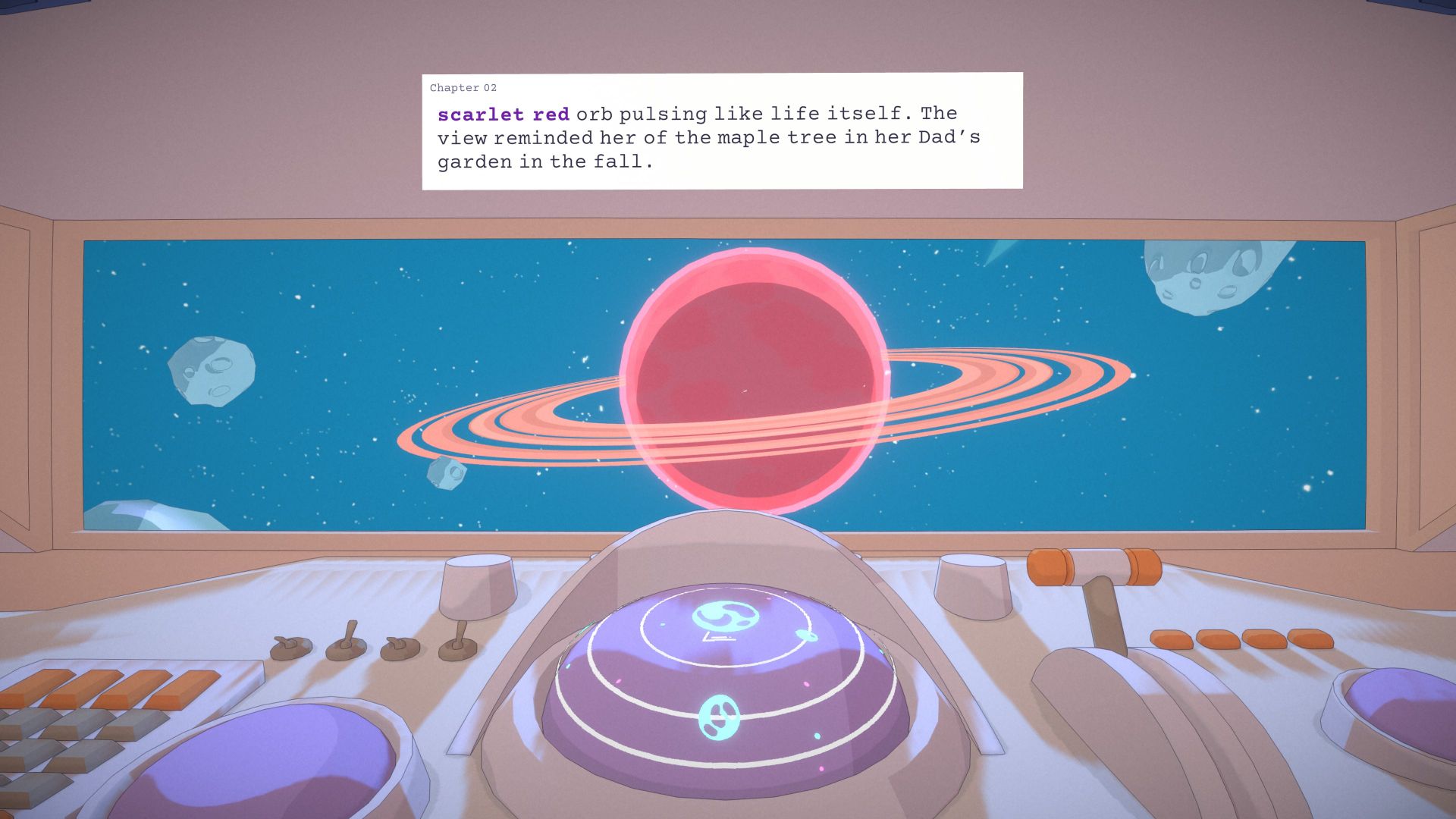
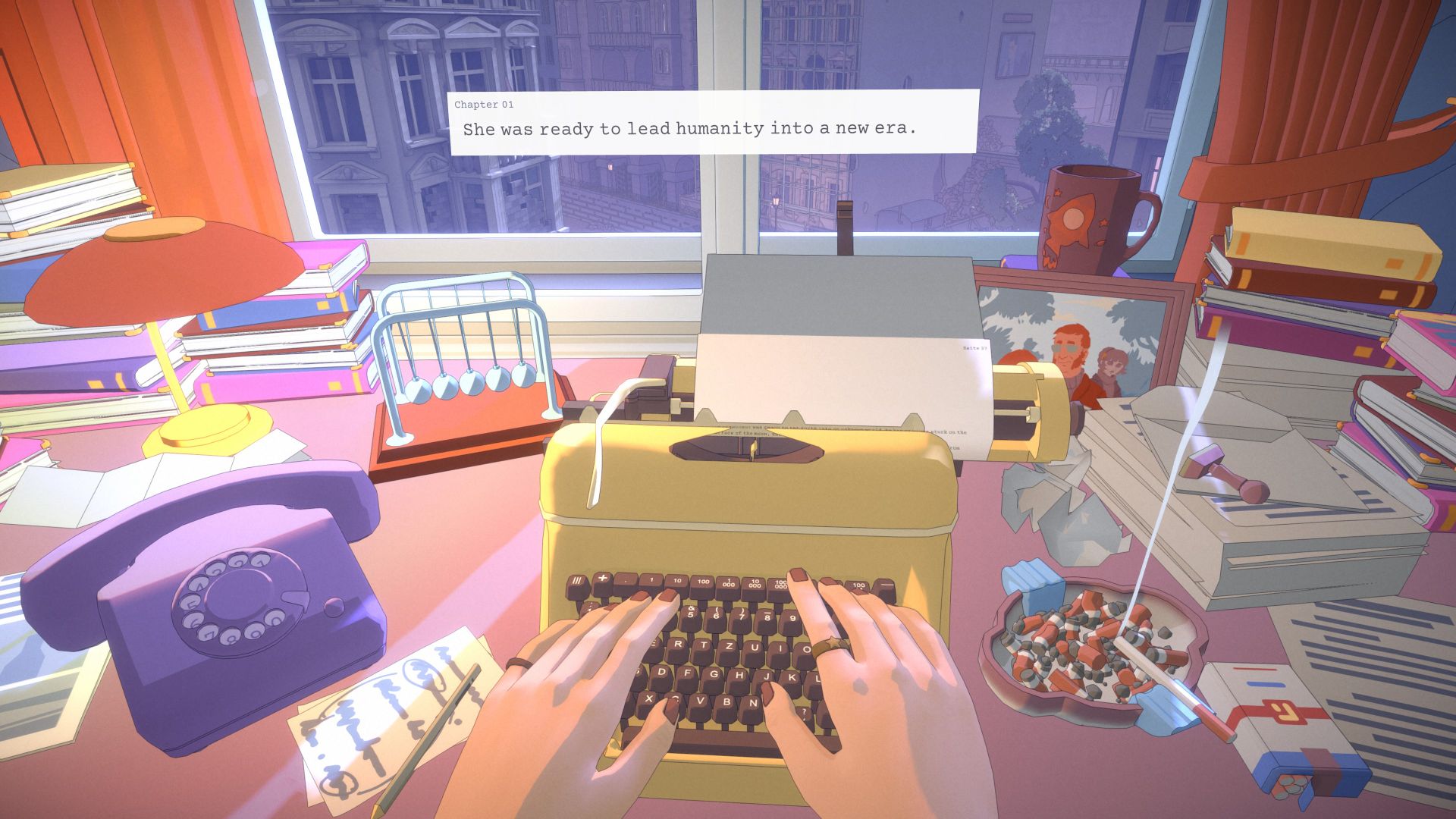
In 1967, under immense pressure from the GDR’s Main Directorate, Antonia “Toni” Zielinski attempts to write a science fiction novel. The narrative seamlessly changes from Toni’s stylishly and contemporary-style apartment to a space station, and our script choices are visualized before our eyes. We not only see Jupiter or Saturn colored in blue or red, it’s also vividly illustrated how the state apparatus tries to completely undermine Toni’s book for propaganda purposes. A nice touch: to continue the story, we have to keep typing to simulate Toni’s typewriter. A gripping tale regarding artistic freedom and father-daughter relations starts to unfold. The interplay between Claudia Eisinger as the sassy Toni and Uwe Preuss as Bülow, the uncompromising bureaucrat of the Main Directorate, keeps us engaged throughout this chapter. The English version, much like the 1989 chapter, lacks the distinctive identity created by the Berlin dialect, even though Giselle Mapp and Harvey Friedmann deliver equally impressive performances.

1989 – Growing Wings
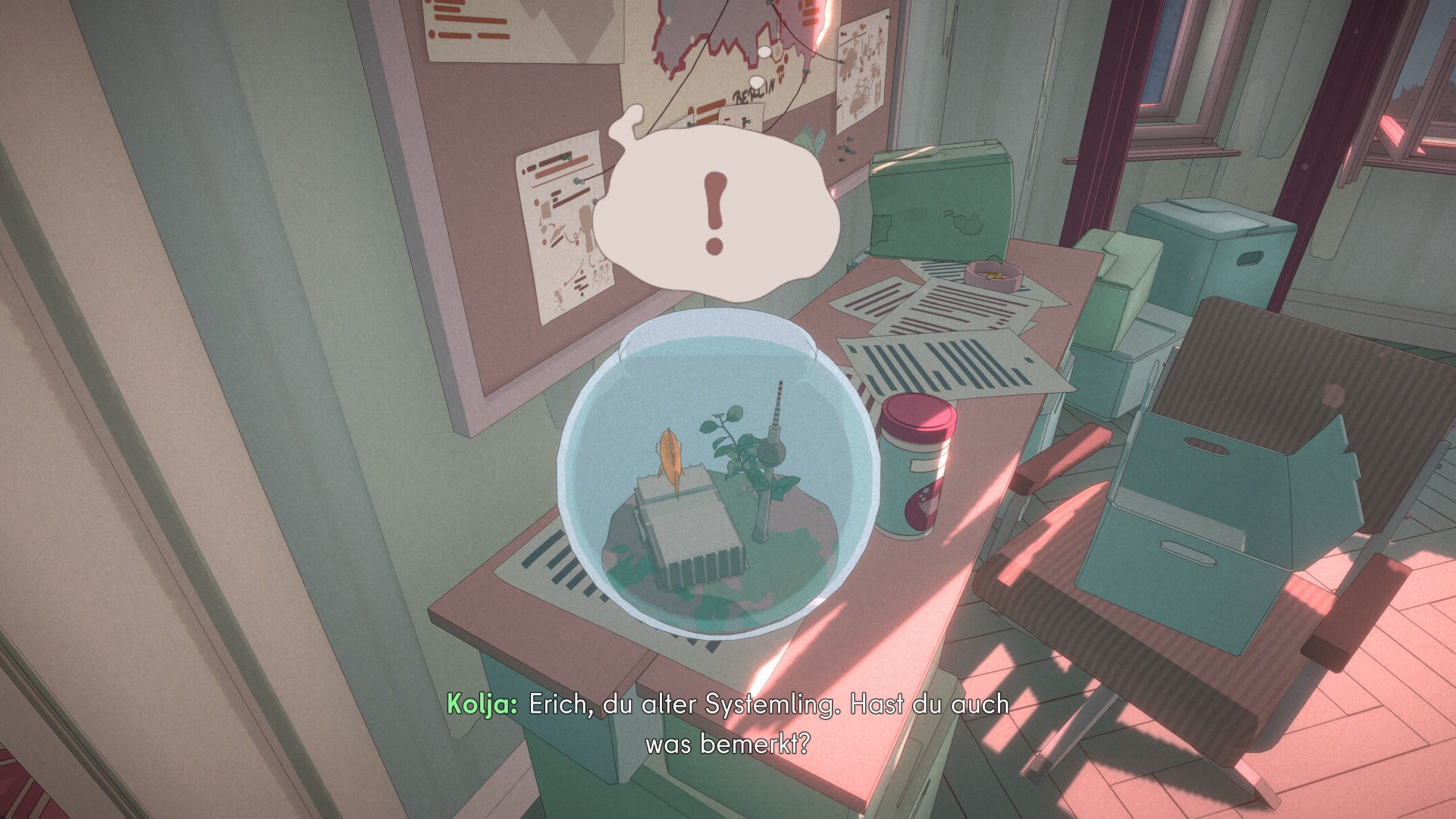
Shortly before the fall of the Berlin Wall, the fates of two people living right next to it clash: Kolja (Kim Hasper/Tomas Sinclair Spencer), a botanist in the East, and Lu (Derya Akyol) in the West. We make paper airplanes and throw them over the wall onto the balcony of another apartment building, a task that becomes increasingly difficult due to adverse weather conditions. The brief conversations with the sarcastic goldfish Erich (Asad Schwarz-Msesilamba), who speaks in a typical Berlin dialect, and his dry comments are particularly entertaining, just like Kolja’s chats with his plants.
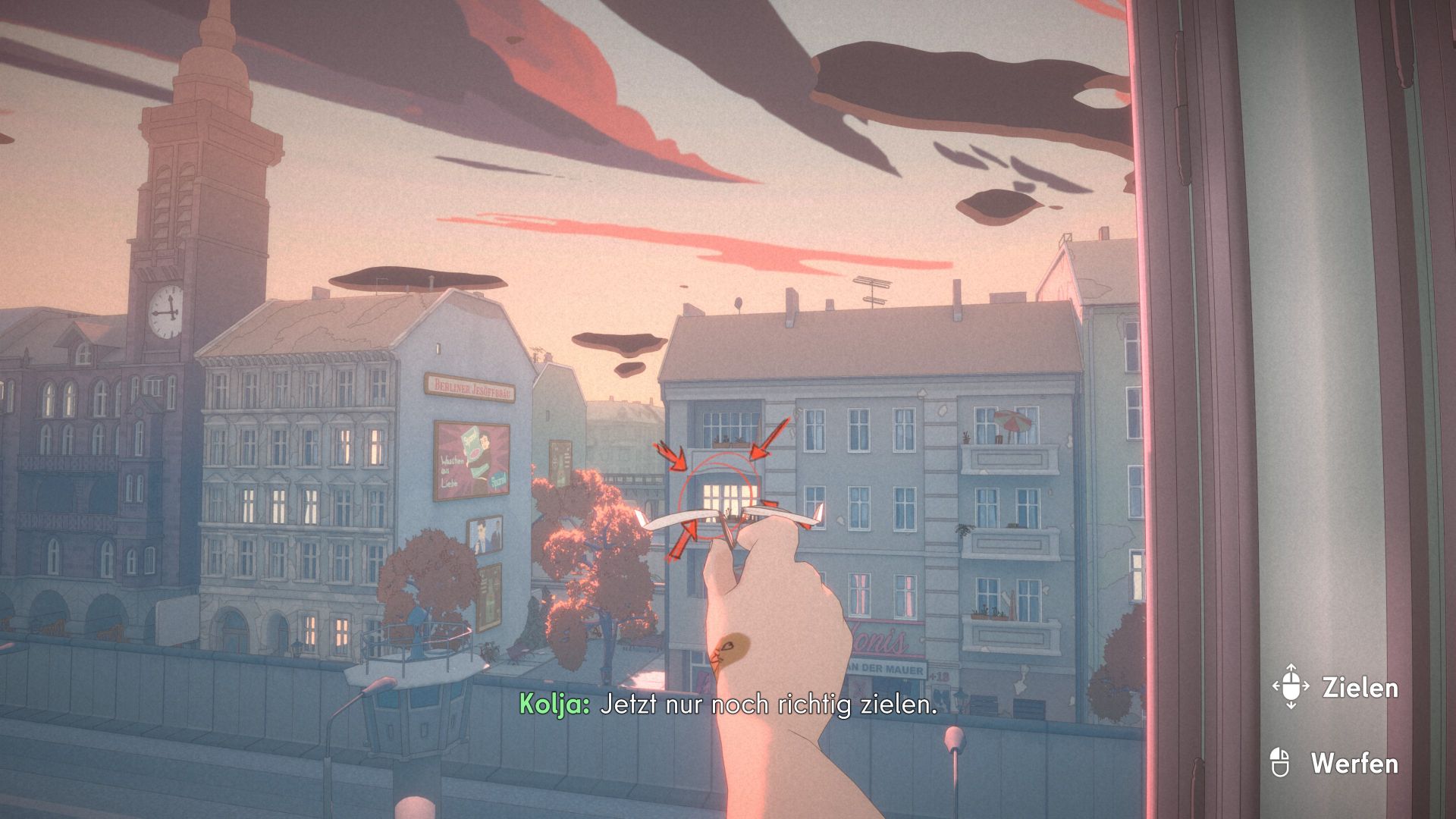
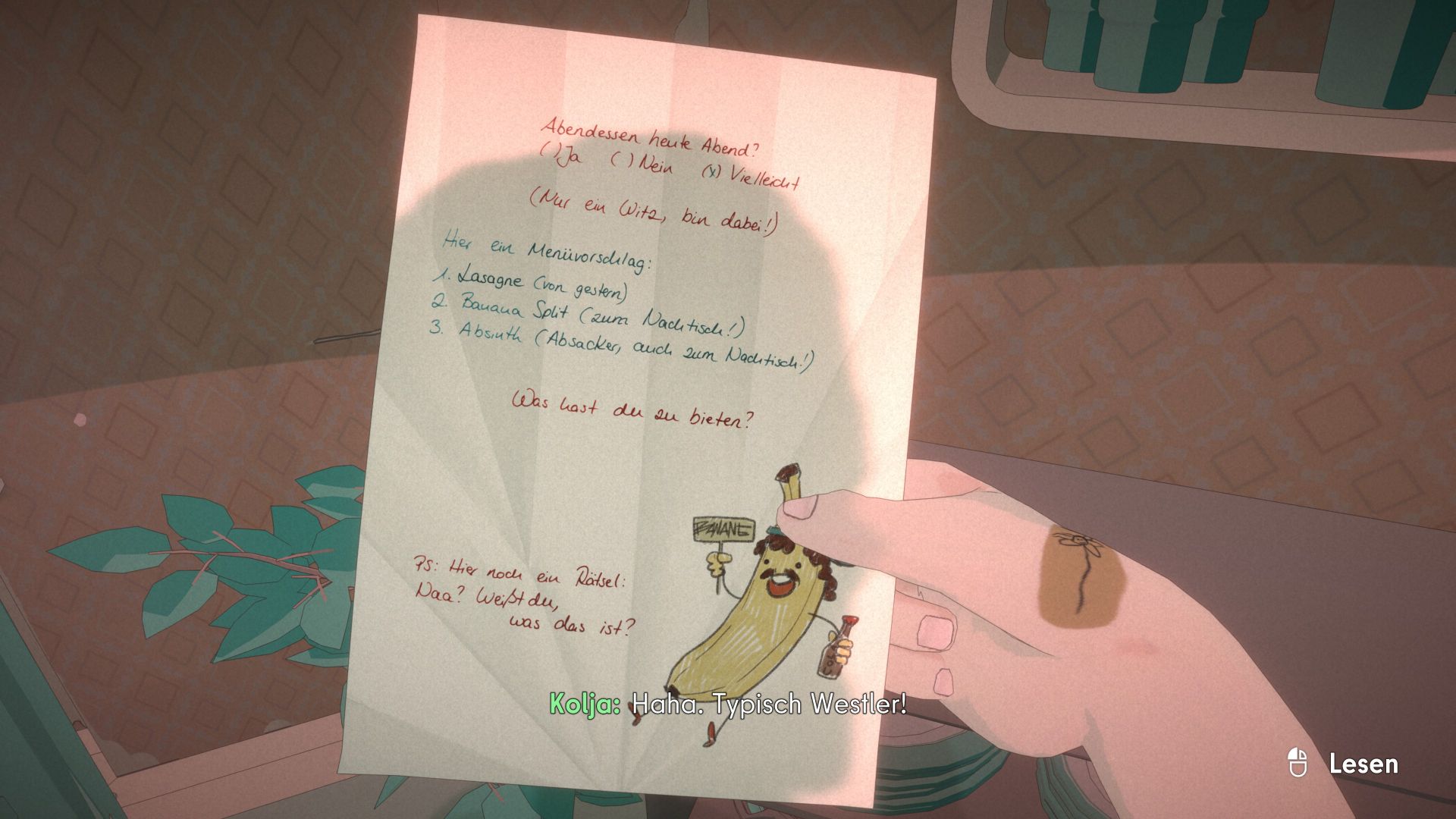
Depending on the era, characters use different vocabulary. Folding the paper airplanes is done using gestures, which works somewhat more intuitively with a controller than with a mouse. Both Xbox and PlayStation action icons are supported on PC.
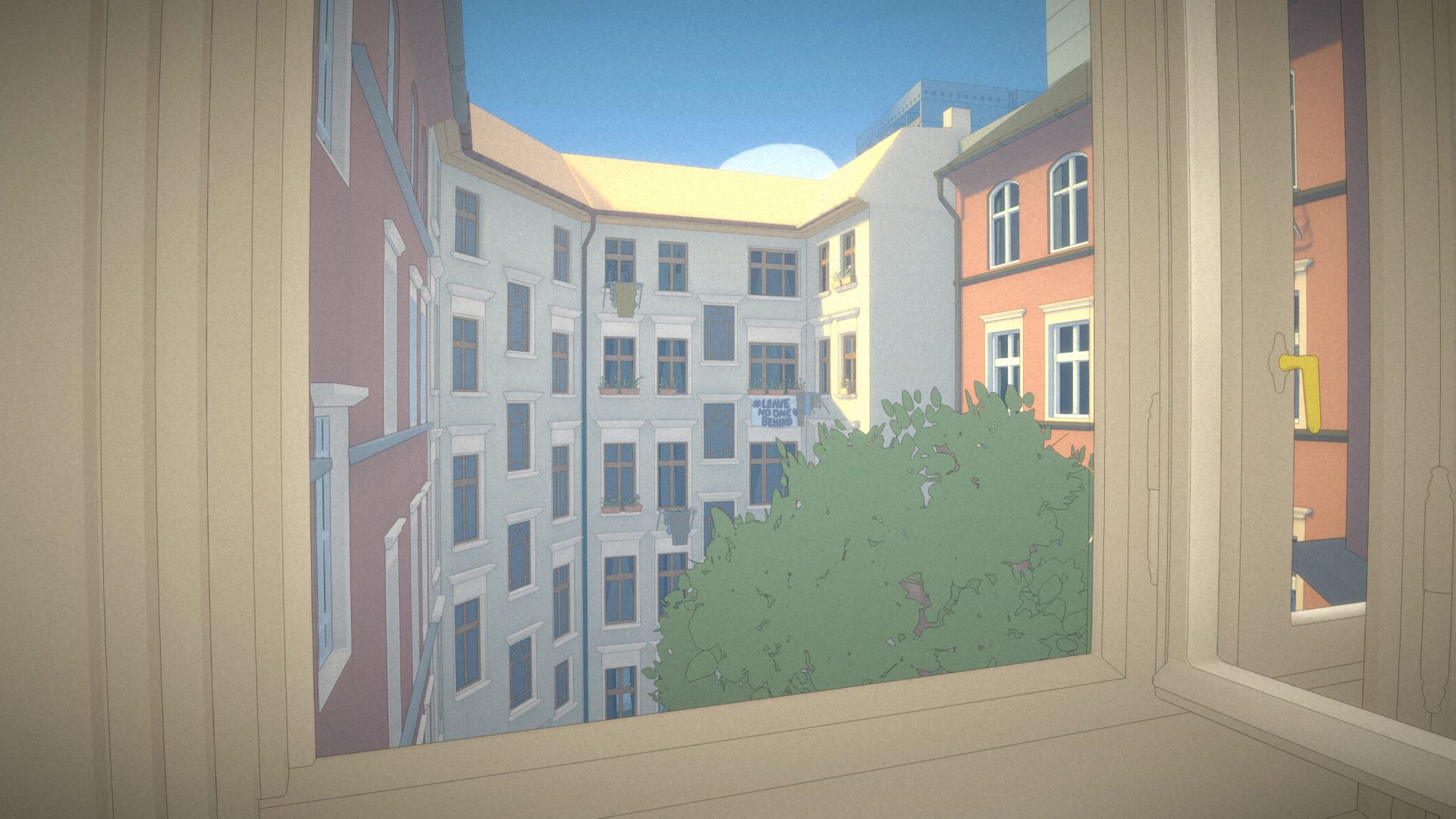
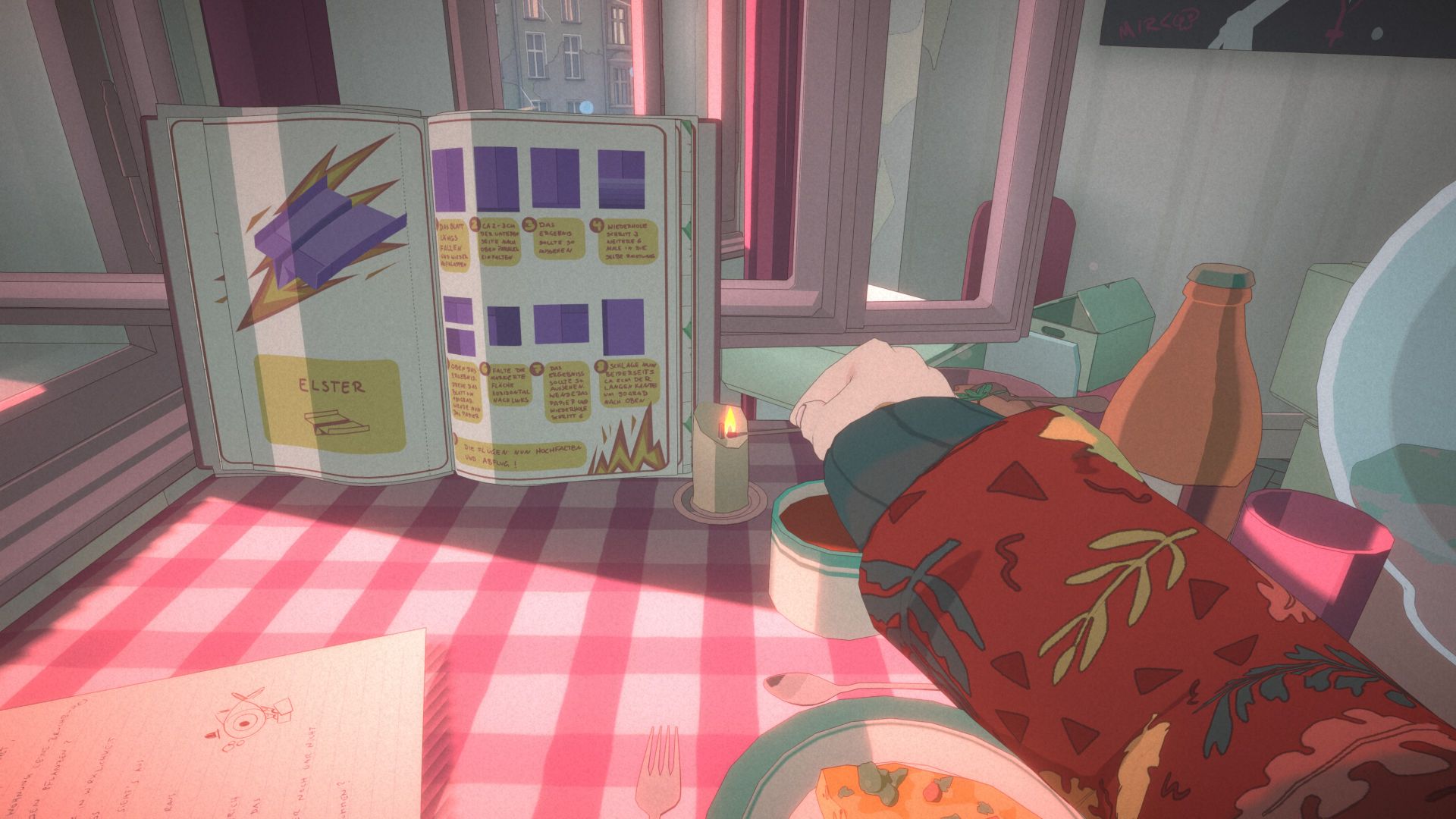
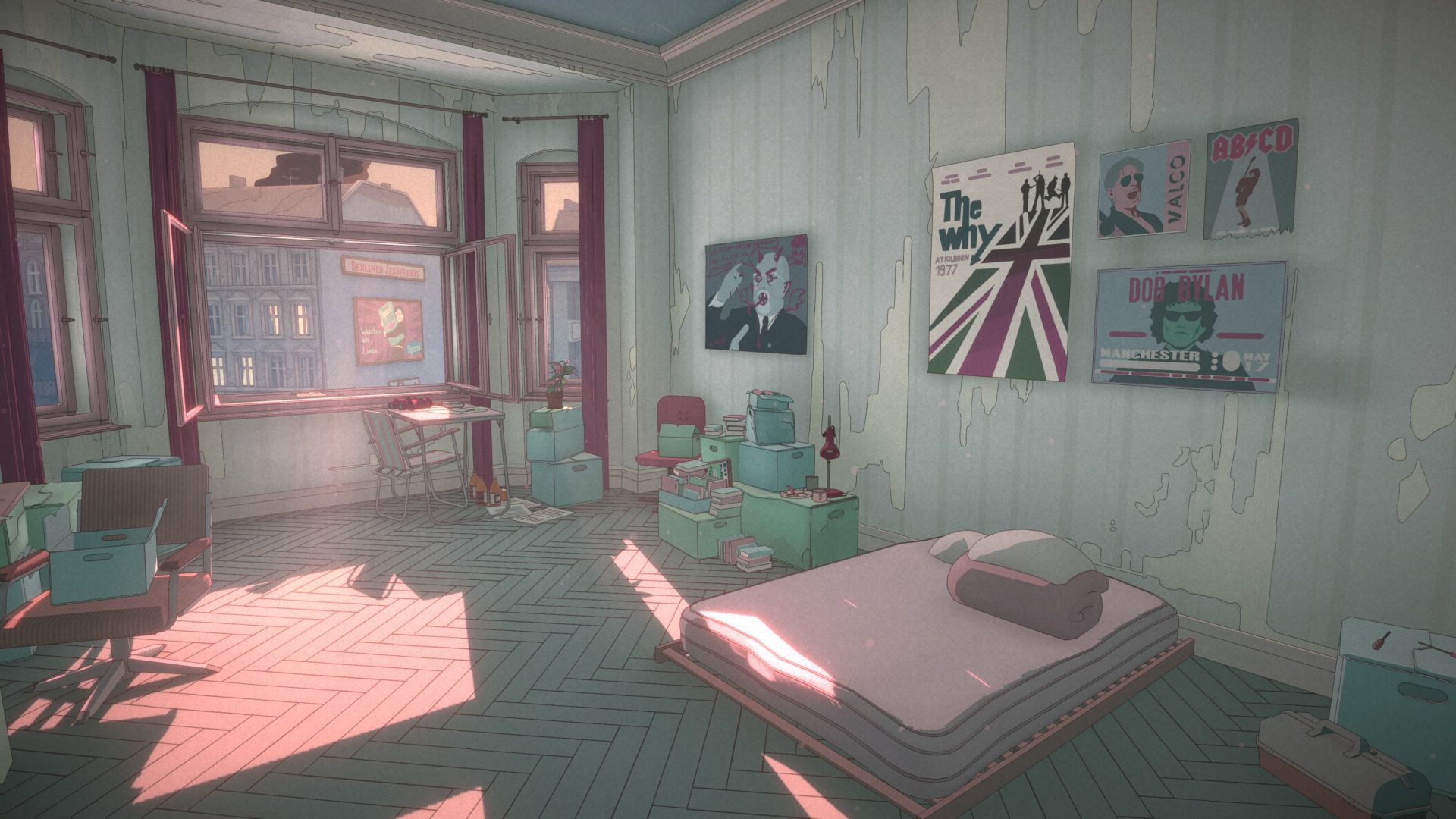
After the roughly three-hour playtime, we can also revisit each chapter to see how our decisions influence the story. We noticed some frame rate drops in the sci-fi chapter set in 1967, which the developers should address. The drops start happening as soon as the tea cups start floating in zero gravity in the old apartment, even with a potent video card such as the GeForce RTX 4070, which drops below 60 FPS at 4K since it suddenly uses a lot less power than in the other chapters of the game.
Final thoughts
The Berlin Apartment is a great slice-of-life adventure with authentic dialogue, relatable characters and a captivating narrative. The game places the player in unique situations, offers insight into Berlin’s turbulent history, and prompts reflection. It’s remarkable how the game, despite its serious themes of war, persecution and restrictions on civil rights, manages to use charm and humor. Even though its narrative is pretty linear, The Berlin Apartment also rewards explorers with numerous small details.
The game’s excellent voice acting, in both German and English, deserves special praise. The narrative comes alive by enabling players to take decisions and interact with the environment. Due to its short play time, the game only offers glimpses into the lives of this diverse group of people, and some characters, such as the present-day father-daughter duo, don’t get the same amount of attention. We can wholeheartedly recommend The Berlin Apartment to history buffs and all those who enjoy gripping narrative adventures.
A PC copy of The Berlin Apartment was provided to us by Blue Backpack Games, which we used to capture the screenshots.
