
Switch to: German
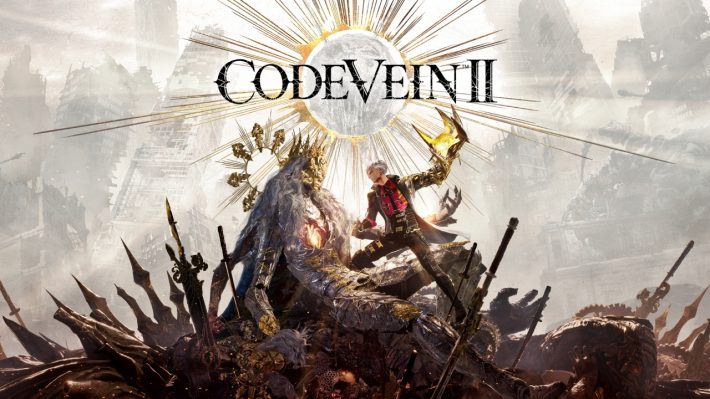
Code Vein II takes Bandai Namco’s series in a slightly different direction, starting with a fresh story and an open world.
This review includes thoughts on the Version 1.0.5 update that released on March 4, 2026.
The original Code Vein was a solid first attempt at a soulslike, taking God Eater’s aesthetic and mashing it with more punishing gameplay. It had some issues (namely in variety and its awful DLC), but for the most part it still offered something unique for fans of the genre.
Over 6 years later, Code Vein II brings the series back, but not in the way most people expected. Rather than continuing the story of the first game, Code Vein II takes place in a completely different world with a new set of characters. Here, a disaster known as the Resurgence threatens the planet, only held at bay by a seal created by heroes of the past. Said seal is also on the brink of collapse, with each hero becoming corrupted in the years since the seal’s creation.

You play as a Revenant hunter – Revenants being near-immortal humans with special abilities – who is recently brought back from the dead. Teaming up with Lou, a Revenant with the ability to travel through time, you head to the past to figure out a way to access each part of the seal, and in turn kill the corrupted heroes.
Time travel stories are hard to do right, since they can often spiral out of control with plot holes and various oversights. Code Vein II doesn’t try to do anything too fancy with the premise, with each section of the story generally focusing on one main character. You travel to a specific era and team up with one of the heroes in the past, complete their storyline, head back to the present to fight their corrupted form, repeat.
It’s a shame that, even with a relatively simple take on time travel, Code Vein II still doesn’t manage to do it right. Since characters are usually only relevant for specific sections, they often end up being gone for most of the story. Sure, you can visit a specific era that allows free exploration and complete some short side quests, but for the most part each character’s story feels a little rushed. And that’s without mentioning side characters, most of which having little to no development for the entire game.
What you get in the end is a story that tries to brute force emotional moments without the build-up to justify them. Even the time travel aspect comes across as under baked, with your impact in the past only amounting to a handful of changes in the present outside of the narrative. Having environments stay exactly the same for hundreds of years doesn’t exactly help sell the gap between each era, no matter how the story tries to present it.
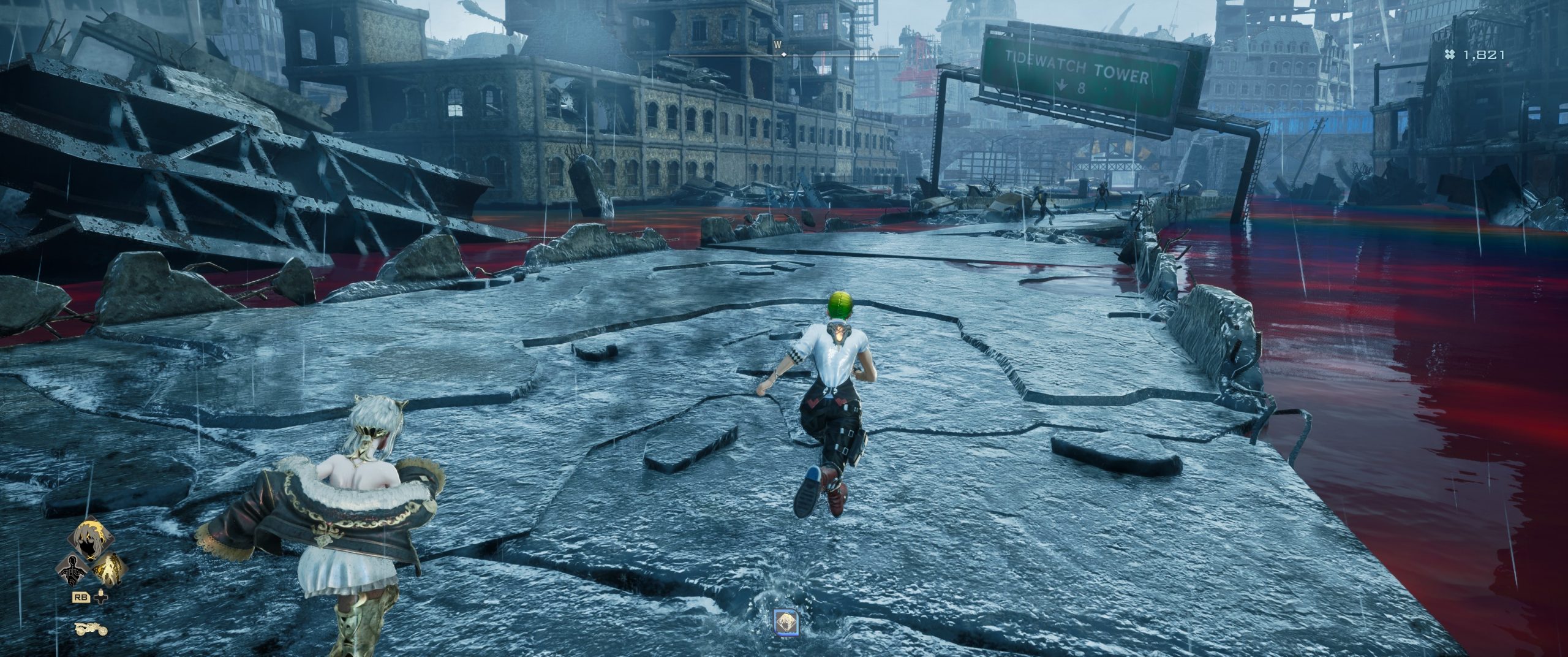
Speaking of environments, Code Vein II ditches the the more linear level design of its predecessor. Instead, you’re given an open world to explore – well, sort of. See, rather than throwing you out into the wilderness and saying “good luck”, Code Vein II is still a very guided experience. After the initial island that acts as a tutorial, you gain access to the main landmass. It’s essentially split into three parts, each featuring a hero you must take down.
What makes this choice somewhat strange is that, despite having the choice to take on each hero in any order, they’re clearly designed to be done in a specific way. In my case, the first section I chose was fairly tough early on, getting easier over time as I leveled up and improved my equipment. But when I took on the next area, I blew through it without any issues due to everything being so weak.
This all comes down to the open world being a bit hollow, even outside of the way progression is handled. There isn’t actually that much to find in the open world, areas feeling copy and pasted at times with very little in the way of enemy variety. You do sometimes run into an optional dungeon, though they’re short and feature repeated bosses.
It wouldn’t be so bad if the gameplay had at least improved over the original Code Vein, but I wouldn’t even say that was the case. At first glance it seems similar, giving you access to a familiar pool of weapons and abilities. Weapons have access to light and heavy attacks, along with special abilities activated by spending Ichor. Ichor in turn is gained via the use of Drain Attacks, moves which can be charged for extra damage and resources.
My issue with combat is that bosses are seemingly not designed around the player’s moveset being, at its best, as good as the first game – I’d even argue that some parts like heavier weapons got even worse. At launch, bosses would often leave very few gaps between attacks, even making sure to attack every time you started healing. This has been improved somewhat in patches, though it’s still far from ideal.
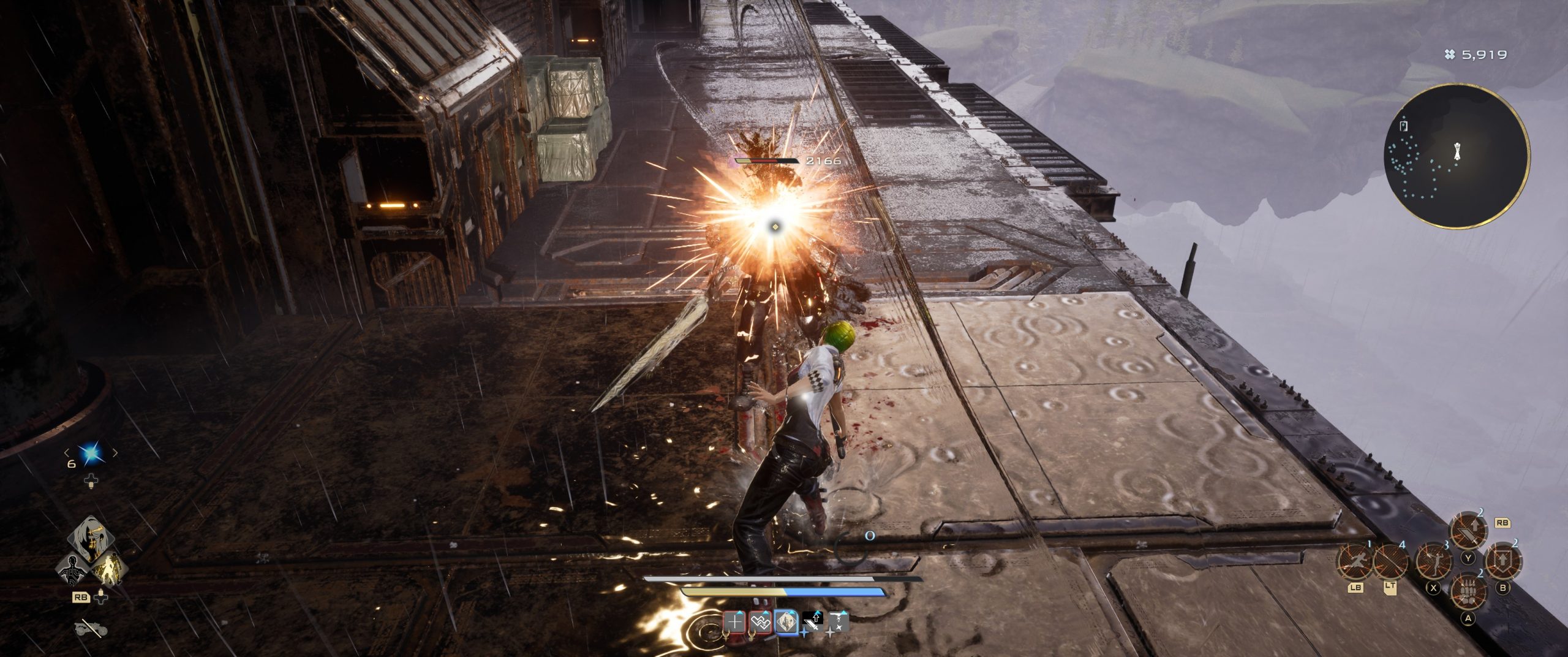
And that’s essentially what makes Code Vein II so unenjoyable a lot of the time. It’s generally not actually that hard, as you outpace the difficulty halfway through (especially if you explore the map and overlevel even further.) I just found that, even if I ended up taking down bosses the first time, I didn’t feel like I’d actually accomplished much. Most of the time I was able to tank through boss attacks, throwing strategy out of the window and treating them as a DPS race.
What makes this so disappointing is that a good amount of effort has been put into letting the player mess around with builds. Levels only determine your baseline stats, with stat scaling and other factors tied to Blood Codes. Blood Codes, which are primarily earned by teaming up with each ally, change your stats and offer up specific bonuses when equipped.
There’s also a unique take on weight/encumbrance, with gear filling each stat individually. Keep the total gear value below half of each stat and you’ll be able to dodge quickly, while going over the limit for multiple stats has you heavy roll. There are even some bonuses tied to specific stat thresholds, rewarding players for paying attention to their equipment. Since you can switch Blood Codes freely, there’s no real penalty for changing how you play at any given moment. I just wish this system was in a game where it would actually matter.
Even if combat gets touched up more ahead of the planned expansion, there’s another area that needs serious improvement: performance. Code Vein II is yet another poorly performing Unreal Engine 5 game, with a fluctuating framerate and noticeable stutters. Regardless of your PC specs (I played through on system with a RTX 5070 Ti) you’ll never get consistent performance even when locking Code Vein II to 60fps.
Fellow writer Lady V had similar issues on Xbox Series X, especially in the open world, and I’d imagine things aren’t any different on PS5. Unreal Engine 5 and poor performance are a common occurrence, and something tells me this likely wont get much better in the future either. What makes it unfortunate in Code Vein II’s case is that this performance hit is all for visuals that aren’t a massive leap over the first game. Sure it’s higher fidelity, though not enough to justify the cost. I’d even say trying to go for more realistic environments harms Code Vein II’s visuals, as they’re even more disconnected from the stylised character models.
Final Thoughts
Code Vein II is disappointing, even if I’ve played worse soulslikes. It didn’t learn anything from the first game’s successes and mistakes, making for a worse game in the long run. The switch to open world could have absolutely worked if done correctly, especially if they’d gone for something closer to the “open zones” of Nioh 3. Instead, level design takes a hit for repetitive environments, with no real incentive to explore outside of a few collectables.
Patches and the eventual expansion give Code Vein II a slim chance to turn things around in the coming year. But as of right now, I’d recommending waiting a while before thinking of trying Code Vein II.
Bandai Namco provided us with a copy of Code Vein II for the purposes of this review. We captured the screenshots on PC.